
In industrial food handling, rigorous hygiene is essential to ensure food safety throughout the entire production chain. From reception and storage to handling and transport, maintaining high standards helps prevent microbiological contamination and safeguards both product quality and consumer health.
Hygiene practices in food receiving and storage
It is important to follow rigorous protocols for cleaning, disinfection, and food handling to ensure quality products. One key stage in this process is the receiving and storage of food.
The following measures help minimize contamination risks and ensure that food remains in optimal conditions until distribution:
- Food inspection: Conduct a thorough inspection of incoming food to detect potential contaminants such as insects, dirt, or packaging damage. Discard any product that does not meet quality and safety standards.
-
Temperature management: Maintain strict control of storage conditions to prevent bacterial growth and preserve product freshness.
- Cleaning and disinfection: Establish a regular cleaning and disinfection routine in receiving and storage areas. All surfaces, shelves and equipment should be cleaned with appropriate products to prevent bacterial growth and maintain a hygienic environment.
Maintaining hygiene in food handling and transportation
Ensuring product integrity and compliance with quality expectations also depends on specialised, fit‑for‑purpose equipment.
Firstly, containers play a key role in safe and organized food storage. These containers are designed with resistant and easy-to-clean materials, facilitating the removal of any residue or contaminants.
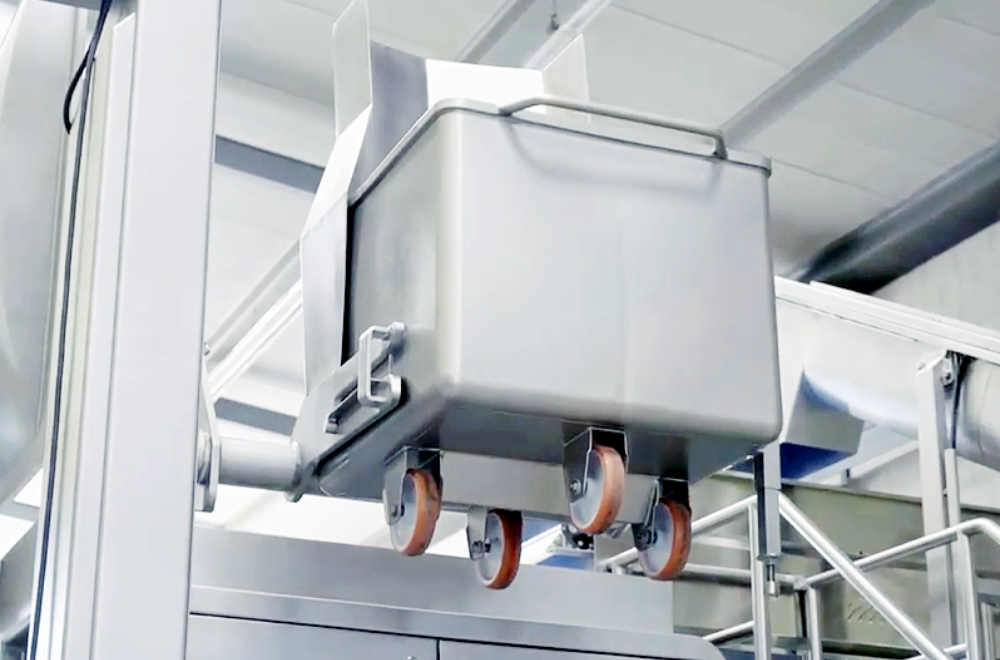
Additionally, trolleys play an essential role in the efficient and safe transportation of food during the handling process. These trolleys are specially designed with materials suitable for the food industry, such as stainless steel, to avoid any risk of contamination. Moreover, their construction allows for easy and thorough cleaning, preventing the accumulation of residues or contaminants.
In addition to specialised equipment, clearly defined hygiene checkpoints within facilities are essential for implementing targeted cleaning and disinfection routines. These control points provide security for both workers and food by implementing specific disinfection and cleaning measures. Hygiene checkpoints help prevent cross-contamination and ensure that food is handled in a clean and safe environment.

In conclusion, hygiene plays a fundamental role in industrial food handling, guaranteeing food safety and product quality. At Roser, we understand the critical role hygiene plays in industrial food handling and are committed to providing robust, high-quality equipment designed to meet the hygiene standards required by the food industry.